Tuesday, October 30, 2007

LPI Day Four Hardware and Architecture


We covered functions of BIOS.

We also covered hard disk parameters and geometry.

Several hard disk related terms were introduced. Including: tracks, sector, head and cylinder.

This hard disk guide covers all.

Monday, October 29, 2007

LPI Day Three Hardware and Architecture


We installed Xubuntu 7.10 on one of the Dell machines (PIII 866MHz with 128MB RAM and 10GB Hard disk). We discussed various BIOS parameters and IDE Hard disk configurations.

We connected IDE hard disk on the primary disk controller and the CD-ROM drive on secondary disk controller. Both the devices were configured as Master.


We also discussed why it is faster to connect the Hard disk and CD-ROM drives on separate on-board IDE connectors.

Thursday, October 25, 2007

LPI Day Two Hardware and Architecture

LPI has certain advantages:

It's vendor neutral.
Respected in the industry
It's body of knowledge is comprehensive

Exam 101 requires the following modules to be covered:

1. Hardware and architecture
2. Linux installation and package management
3. GNU and UNIX commands
4. Devices, Linux filesystems, and Flie System Hierarchy Standard
5. The X Window System

Module 1 (Hardware and architecture)

We began with introduction to BIOS and its common functions.

We covered BIOS settings including:

1. Hard disk setup
2. Boot sequence

On a side note Ubuntu and its lighter version Xubuntu 7.10 has been released. We will be installing Xubuntu on lab PCs.

Wednesday, October 24, 2007

LPI Day One


We began with an introduction to LPI certification and its body of knowledge. We will be preparing for Exam 101 which consists of five major modules. We will be following IBM developerWorks' LPI exam preparation material (free registration required for access). I think its the best material out there available for free.

There are a couple of challenges though:

1. We have to prepare the slides as no corresponding slides are available as teaching material. We plan to make the presentation slides visually rich as opposed to text-heavy approach.

2. We are on a tight schedule as we have to finish 1 module per week in order to take the exam by the third week of December.

This will be followed by Exam 102 to become LPIC-1 certified.

Tuesday, October 23, 2007

Day 21 Final Exam


Today is the last day of our basic class. I made the final exam a little bit difficult just to give the students an idea about the kind of questions they will be asked on a certification exam. The results are in:


This concludes the basic course. From tomorrow we will be starting the LPI track. We have setup a small lab in Shirin Keshani Building and will be moving there soon.

Monday, October 8, 2007

Day Twenty (Network Types and Topologies)

Different network types were introduced. We discussed Local, Metropolitan and Wide area networks. We also did some exercises in differentiating these networks.
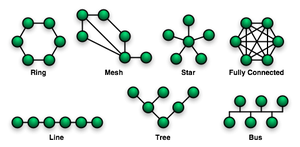
We discussed network topologies. In particular we discussed fully connected network, star network and ring network.


As an example we discussed the early communication networks including the telephone and telegraph network. We also discussed the telephone switch boards and the modern telephone switch found in a telephone exchange.

Alexander Graham Bell and his inventions were discussed too. We also looked at the Top 10 Innovations from the Bell Labs.

Today is the last class of this Basic course. We will resume classes after Eid from Friday October 19, 2007. There will be a test on what we have covered so far on Monday 22 October, 2007. After Eid holidays we will start the course for LPI certification.

Friday, October 5, 2007

So Who is a Systems Administrator Anyway?

As part of our direction setting shot its important that we decide on the outcome. We have to have the end in mind. The biggest question is how do we see our students as system administrators.

A systems administrator is a kind of jack-of-all-trades. They ought to have good social skills and are happy to work in a team. A systems administrator should have good problem solving skills which I believe comes with experience (sometimes bitter sometimes sweet). Another trait would be remaining calm under pressure.

This ComputerWorld article summarizes the Systems Administrator's job pretty well.

Another question is what makes the systems administration skills for the deaf students workshop different from any other program. Well I think there is no difference at all. The only difference is probably the sign language interpreter.

Wednesday, October 3, 2007

Day Nineteen

Today was the continuation of Bilal and Faiza's class.

We also did decimal to binary conversions in the class.

Tomorrow (Thursday) is a school holiday. We will resume from Monday 8th October 2007.

Tuesday, October 2, 2007

Day Eighteen (Students as Teachers)


Today Bilal and Faiza conducted basic training on Internet Usage for a batch of six students (all from Intermediate, first year class).

The training will cover Linux basics, hardware basics and Internet usage. Classes will be held twice a week. Another two batches will also start this week with Al-Aifa & Atif and Imran & Joseph as teachers.

This will give the students an opportunity to polish their teaching skills and to revise what they have learned so far.

Ms. Nasreen Rahman and Ms. Rabia were present in the class as coordinators.

We also discussed ASCII codes.

Monday, October 1, 2007

Day Seventeen ( Decimal and Binary Numbers)

We began by introducing the students to decimal numbers and how each digit's position has a particular significance. The right most digit is a multiple of 10 to the power 0 and the power of 10 increases by one as we move from right to left.

We also did the binary number system where every number is represented by a combination of 1 and 0.

Binary to decimal conversion was introduced.